


Displaying items by tag: donations
Letter from the Executive Director
from Executive Director, Danielle Vázquez

Following the heartfelt introduction from our new Development Director, I want to extend my own warm welcome to Cathy on behalf of our entire team. We are thrilled to have such passion and experience joining our mission to prevent shaken baby syndrome and improve the wellbeing of infants and families. Her leadership will be instrumental as we continue to grow our impact and deepen our connection with supporters like you.
As we celebrate 25 years of advocacy, education, and prevention, we are deeply reminded that we simply could not have come this far without your support. Every milestone we’ve reached has been made possible by donors like you - your commitment fuels our work and gives hope to the families we serve.
If you’re able, please consider making a gift today to help us continue this life-saving work for the next 25 years and beyond.
With gratitude,
Danielle Vázquez
Executive Director
National Center on Shaken Baby Syndrome
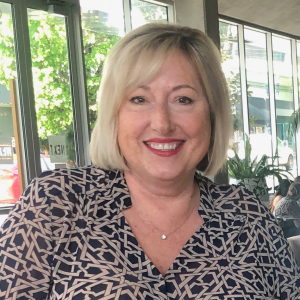
Catherine Green
Paddle Raise Success
A Wave of Generosity: Paddle Raise Success
One of the most exciting moments of the evening came during our “Paddle Raise” fundraising moment, led by Executive Director Danielle Vazquez. She set the tone with a heartfelt message: “We’ve come far, but we’re not done. The next 25 years start now, with all of us, right here, tonight.”
The first pledge request was for a $25 donation. $25 provides training to childcare providers, ensuring they receive crucial tools and resources to best care for a crying baby in a safe environment. Each table joined in the fun, with a little healthy competition fueling the spirit ofgiving. Laughter, applause, and a shared sense of purpose filled the room.
Another pledge level was a $100 donation. This amount would support prevention education for a high school child development program indefinitely. When the $100 pledge amount was put forward, we continued to see contributions throughout the room.
Lastly, Executive Director Vazquez challenged the guests with a $500 pledge. $500 would support the delivery of the Period of PURPLE Crying program to all families of a new baby in a rural hospital for a year. In an incredible show of support, several individuals pledged the maximum amount.
At every level, the Paddle Raise resulted in an inspiring outpouring of generosity from our community. Together, guests raised $5,455 to help sustain and grow our programming, ensuring families and caregivers continue to have access to tools, resources, and support when they need it most.
This moment was a powerful reminder: when we come together, we can do big things.
25th Anniversary Gala Success
25th Anniversary Gala Brings an Outpouring of Love and Support for NCSBS

In the words of NCSBS Executive Director, Danielle Vazquez, “Our 25th Anniversary Gala was a resounding success!” The celebration took place at the Davis Conference Center in Layton, Utah, where we welcomed 150 supporters, board members, staff, and volunteers—all champions of the NCSBS mission. “We raised a significant sum to support our programs, and the evening was filled with heartfelt speeches, inspiring presentations, and joyful connections. We are incredibly grateful for the dedication and generosity of our community, and we look forward to celebrating 25 more years of shaken baby/abusive head trauma prevention impact together,” said Vazquez.
Planning for the gala was an all-hands-on-deck effort from our team. We chose to have the event in April in honor of National Child Abuse Prevention Month. With the date set, preparation began and involved coordinating the details for the venue, selecting live musicians, creating the center piece decorations, and spreading the word on social media.

One of our standout steps was to create a timeline of the NCSBS’ history and accomplishments to be presented at the event. Executive Director Vazquez connected with our founder and former Executive Director, Marilyn Barr, and began diving into archives to recount stories, milestones, and key events that have shaped the organization over the past quarter-century. After 25 years of service, the NCSBS has stood the test of time, and was established before some of our staff were even born! At the 25th Anniversary Gala, we reflected with pride on the mission-driven progress we have made.
The gala evening began with a welcome address by Board Chair Bryce Froerer, JD, who thanked the NCSBS staff: “Your dedication drives everything we do.” He recognized both current and former board members for their leadership and paid tribute to the families of victims and survivors saying, “You are at the heart of our work.” He also acknowledged our many supporters who couldn’t attend due to distance and expressed gratitude to the generous sponsors who helped make the event possible.
Executive Director, Danielle Vazquez, who has led the NCSBS since 2022 with a tenure spanning 18 years, then took the stage for a toast: “Here’s to the children and families we’ve served, to the survivors and the stories that inspire us, to the tireless dedication of our staff, board, and supporters, and to a future where every baby is safe and every caregiver is supported. To 25 years, and to the next 25.”
Next, we had the opportunity to share the timeline of the NCSBS’ history and accomplishments through a presentation produced by the NCSBS marketing team, “A Look Back at 25 Years of impact.” It was a powerful retrospective of our work, highlighting national and international reach over the past twenty-five years through infographics, data, and milestones. The presentation emphasized lifesaving educational and prevention programs and featured collaborations with hospitals, healthcare providers, and community organizations.
Perhaps the most poignant moment of the presentation came from the families of victims, survivors, and healthcare professionals who advocate for SBS/AHT prevention. In a video put together by the NCSBS marketing team, our longtime friends and partners in prevention answered the question: “What does the NCSBS’s 25th anniversary mean to you?”
“Without your sensitivity, compassion, and guidance early on, we would not have survived.”
“You helped me share my story and supported my undergraduate research as a survivor of SBS.”
“I’ve made priceless connections and found the courage to share my experience in hopes of preventing this abuse from happening to another child.”
“NCSBS changed the trajectory for children who’ve been shaken—and became a source of strength for me.”
“You gave me a way to turn pain into purpose.”
The responses struck a chord with attendees, many of whom were visibly moved by the stories and the work accomplished over the past 25 years. It served as both a celebration of progress and a call to action, reinforcing just how far-reaching and necessary the mission of NCSBS remains. (Watch the video in the YouTube player)
“Looking ahead to the next chapter, we acknowledge the work still to be done,” said Vazquez. “We dream of a world where no child is harmed this way again, and where every caregiver isequipped with the resources, education, and compassion they need to thrive.”
THANK YOU to the following businesses and individuals whose generosity made this event possible








Medical Consensus
-
General Consensus
In May 2018, The Society for Pediatric Radiology (SPR), European Society of Paediatric Radiology (ESPR), American Society of Pediatric Neuroradiology (ASPNR), American Academy of Pediatrics (AAP), European Society of Neuroradiology (ESNR), American Professional Society on the Abuse of Children (APSAC), Swedish Paediatric Society, Norwegian Pediatric Association and Japanese Pediatric Society published a joint consensus statement on abusive head trauma/shaken baby syndrome. This is the most comprehensive and complete consensus statement published to date. The statement is published in Pediatric Radiology.
American Academy of Pediatrics
 The AAP continues to affirm the dangers and harms of shaking infants, continues to embrace the “shaken baby syndrome” diagnosis as a valid subset of the AHT diagnosis, and encourages pediatric practitioners to educate community stakeholders when necessary.
The American Association of Neurological Surgeons
 Shaken Baby Syndrome (also known as Shaken Impact Syndrome) is a serious form of abuse inflicted upon a child. It usually occurs when a parent or other caregiver shakes a baby out of anger or frustration, often because the baby will not stop crying.
Canadian Joint Statement on Shaken Baby Syndrome/Abusive Head Trauma
 Shaken Baby Syndrome is a collection of findings, all of which may not be present in any individual child with the condition. Injuries that characterize Shaken Baby Syndrome are intracranial hemorrhage (bleeding in and around the brain); retinal hemorrhage (bleeding in the retina of the eye); and fractures of the ribs and at the ends of the long bones.
The American Academy of Ophthalmology
 Shaken Baby Syndrome is a subset of Abusive Head Trauma characterized by repetitive acceleration-deceleration forces with or without blunt head impact resulting in a unique complex of ocular, intracranial, and sometimes other injuries, usually in infants…it has become widely recognized as one of the most serious manifestations of physical child abuse.
Centers for Disease Control and Prevention
 Abusive head trauma (AHT), which includes shaken baby syndrome, is a preventable and severe form of physical child abuse that results in an injury to the brain of an infant or child. AHT is most common in children under age five, with children under one year of age at most risk. It is caused by violent shaking or blunt impact.
The Royal College of Ophthalmologists and The Royal College of Paediatrics and Child Health
 A child suspected of abusive head injury is referred by paediatricians to an ophthalmologist for evaluation. The incidence of abusive head injury in children is highest in infancy and less frequently seen in children over 3 years of age. Retinal haemorrhages have a high positive predictive rate for abusive head injury.
French Society of Physical Medicine and Rehabilitation
 SBS is a type of inflicted, non-accidental or abusive head injury caused by shaking (either alone or combined with an impact). It mainly occurs in babies under the age of one. It is thought that 180 to 200 children per year are victims of this type of abuse in France, although this value is certainly an underestimate. Failure to diagnose SBS increases the likelihood of recurrence.
American Association for Pediatric Ophthalmology and Strabismus
 SBS, a form of non-accidental trauma, occurs when babies are shaken. This shaking damages the brain and eyes and can lead to lifelong consequences including death. When there is suspected abuse an eye examination is performed to look for injury. The eye examination is only one aspect of an SBS diagnosis. An evaluation includes multiple experts who examine the child’s brain, bones, and environment. Alternate explanations for injuries are looked into and tested prior to diagnosing SBS.
Research
-
Articles Everyone Should Know
These are some of the most relevant research articles about Shaken Baby Syndrome/Abusive Head Trauma that will aid a lay person wanting to learn more about this form of child abuse.
Recent Research
The list below contains the most recent research relevant to SBS/AHT published during the past few years. The list cites the article’s title, author(s), title of the periodical or book, publication date and a link to the abstract or full article (if available).
State Specific Legislation
-
Please click on a state to see the legislation related to shaken baby syndrome specific to that state.
FAQ
Attention on Prevention Podcast
-
Attention on Prevention podcast brings in guests to talk about the prevention of child and infant maltreatment as well as delve into other parenting issues. We'll bring in families of victims of abuse and victims themselves to discuss their stories, world experts in various medical fields to discuss current research and past experiences as well as other guests with legal and prevention backgrounds. Brought to you by the National Center on Shaken Baby Syndrome. You can find each month's episode here on our website or wherever you get your podcasts.
Donate